
Our President Ray Colmenar spoke with UPM’s Executive Director Nicole Lee about reimagining community safety in Oakland through youth-led movements.
This year, we are spotlighting leaders from our All In for Oakland grantee partners, and I am thrilled I had the opportunity to speak with Nicole Lee, Executive Director of Urban Peace Movement. Urban Peace Movement (UPM) builds youth leadership in Oakland to transform the culture and social conditions that lead to community violence & mass incarceration in communities of color. UPM’s model of “Healing-Centered Youth Organizing” supports young people to feel self-confident and hopeful while empowering them to work for healing, social justice, and a brighter future for all.
Read my interview with Nicole to learn more about her and UPM’s work to change systems, heal communities, and build youth movements.
— Ray Colmenar, President of Akonadi Foundation
There is a false narrative that our current systems were set up to create safety for us all, but in actuality, they only create a temporary and false sense of security for a small number of people at the expense of mostly underserved communities.“
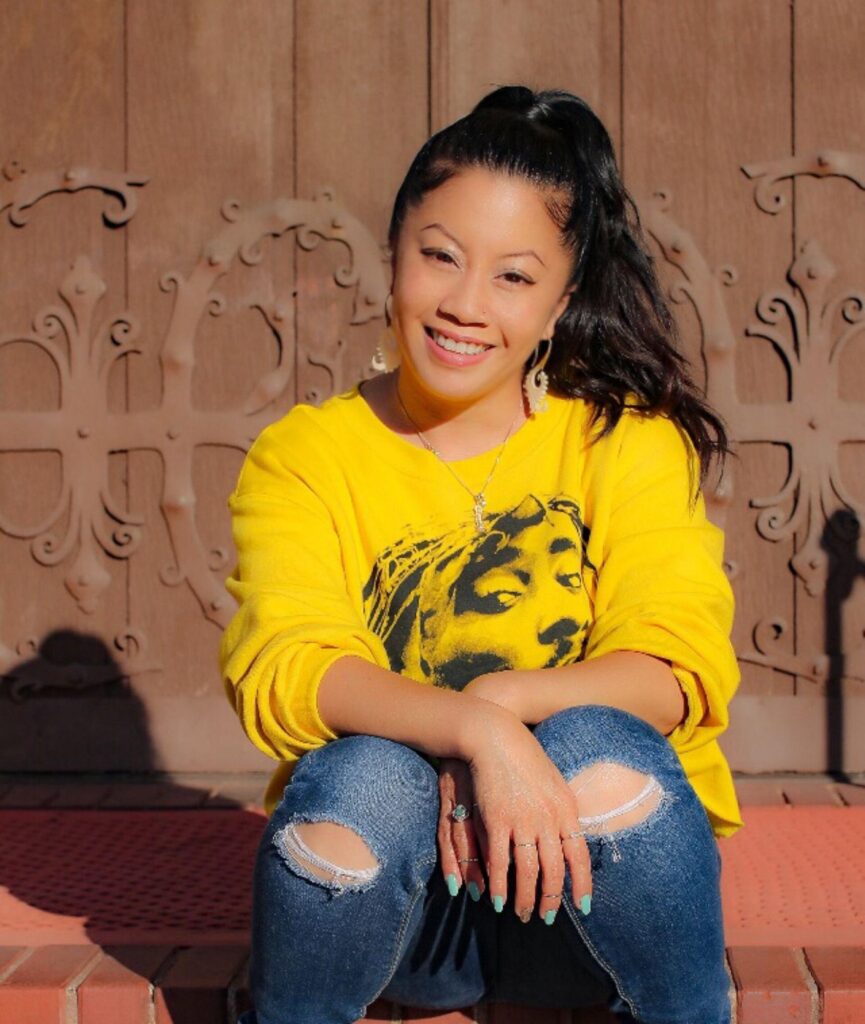
A: There is a false narrative that our current systems were set up to create safety for us all, but in actuality, they only create a temporary and false sense of security for a small number of people at the expense of mostly underserved communities. I’ve lived in so many neighborhoods throughout the Bay, from affluent to low-income, and safe neighborhoods do not have police on every block. They have good schools, recreation centers, and access to opportunities. That’s what safe neighborhoods look like. That’s what safety is.
We should not let fear consume us. That’s what causes knee jerk reactions, instead of long-term sustainable solutions that address the root causes of crime and foster environments where everyone can thrive. In the meantime, there are simple things we can put in place to ensure people feel safe that are not reliant on systems of criminalization and mass incarceration. The Oakland Community Ambassador Program and the street and music festivals that UPM hosts have both been increasing safety in our communities.
A: Young people working with UPM feel concerned about calls for increased policing and harsher laws and punishment. They have mentioned feeling uneasy because of the false narrative around young folks being the cause of increases in crime. They also feel unsafe because, under this narrative, they might be targeted by police.
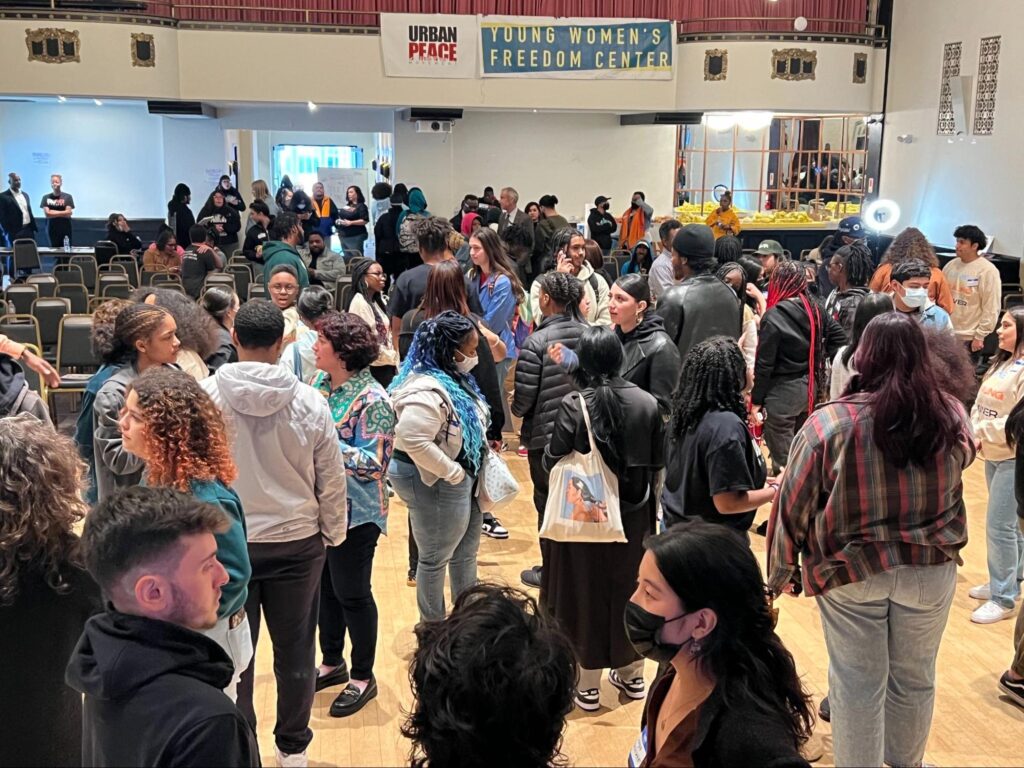
A: UPM is a grassroots organization with 12 staff members, so we’re close to the ground and scrappy. We do community healing work and lots of community engagement, but we are a youth leadership organization at our core.
Our Leaders In Training (L.I.T.) is a youth organizing & social justice leadership program for high school-aged youth from neighborhoods in Oakland and southern Alameda County directly impacted by community violence and mass incarceration. We also have our DetermiNation Black Men’s Group, a brotherhood circle focused on cultural healing and social justice for young Black men aged 15-26 who are formerly-incarcerated/systems impacted.
For youth who have been through one of our programs and have a continued interest in leadership, we have a youth leadership council within our social justice committee. It has been inspiring to see all of these leaders grow and find their agency.
A: Healing supports organizing and systems change. A lot of us got into this work because we know there are some real systemic issues in our society, and we wanted to shift structures in society to create equity and end trauma.
Hope and healing drives systemic change. When we are hopeful, we can reimagine and expand our visions, hopes and dreams and that increases our ability to create real, systemic change.
Detroit activist Grace Lee Boggs talked about when her city felt hopeless, she saw an opportunity to reimagine a new reality for it, a vision that can only be seen when you have a sense of optimism. Organizing is hard work and it is exhausting – It consists of crazy hours, weekend work, and a difficult time managing a work/life balance. It is rewarding to be able to do something that aligns with your heart, but it is crucial that organizers attend to their boundaries and self care. That is how you continue to sustain yourself in this work.
A: UPM’s approach is that we can not do this on our own. We joined the Free Our Kids Coalition to be part of a movement, a collective group of organizations working together to support youth development and well-being through a community justice model.
Coalitions are not permanent structures. They come together to meet a particular moment. In 2019, Free Our Kids Coalition started in response to the proposed $75 million, 100-120 bed facility by Alameda County. Our ask was to replace this facility with a youth center or housing for emancipated youth or children in the welfare system. Our collective work and advocacy was successful in ending the proposal. Since then, we have reoriented to call for ending the incarceration of young people.
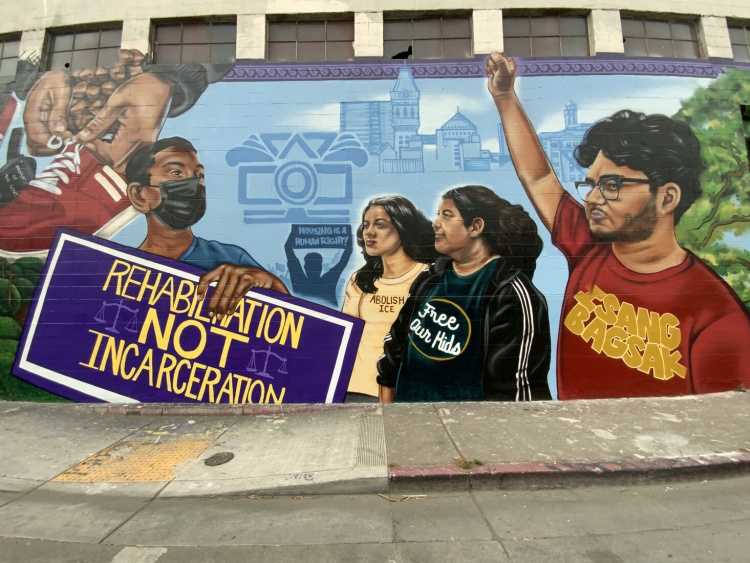
A: Young people within our coalition, including UPM, CURYJ, 67 Sueños, Young Women’s Freedom Center and Bay-Peace were inspired by the Black Panther Party and decided to create a 10 Point Plan for a reimagined justice system that will make communities safer and produce better outcomes for youth than the punitive system currently in place. Driven by this vision, they drafted a plan and painted a mural on E 12th Street in Oakland under 67 Sueños’ leadership. The 10 Point Plan empowers and centers youth voices, and it gives the youth an opportunity to demand the justice they deserve and want to see in their communities.
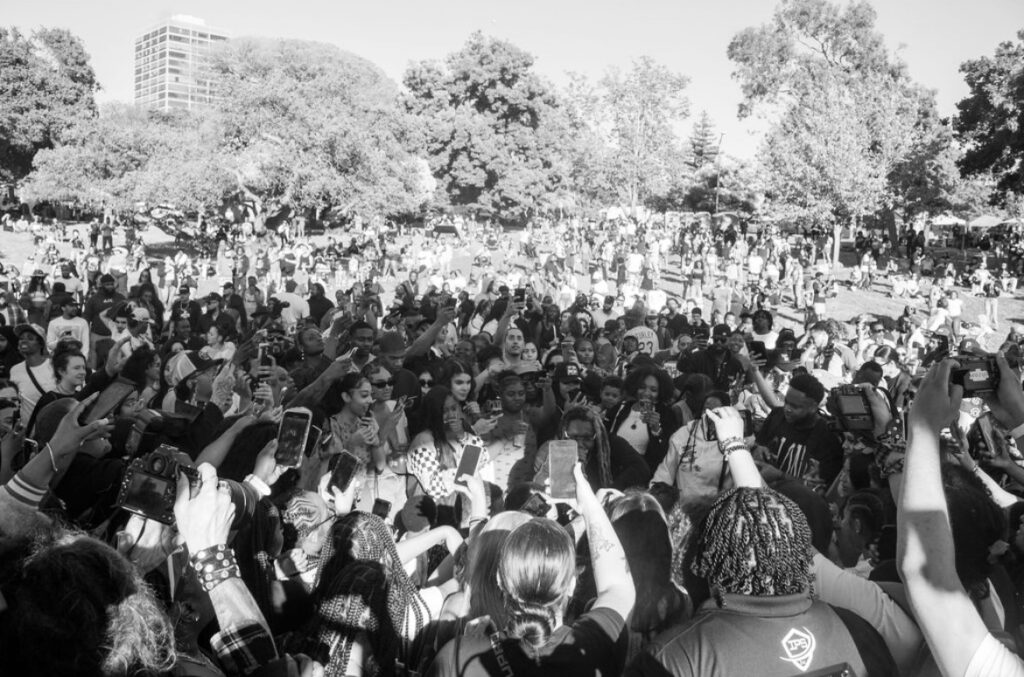
Town Up Tuesday is a full display of Oakland’s culture, from our music to the way we dress and our unique style of dancing, and it is the most beautiful thing I have seen in my life. It shows us that safety can be fun, not just quiet and boring.
When we host our events, there is community engagement and a reduction in crime. There is a lot of hip-hop influence at our event because the culture has been a large part of activism throughout history. Social justice and hip-hop are intertwined.
We hosted Town Up Tuesday after the COVID-19 pandemic halted our ability to come together for in-person connection. We knew our community needed this space, and it gave us the opportunity to throw a big concert centered around Oakland culture and educate people about their local elections.
We had over 2,000 people attend this year. Someone came up to me and said “This feels like Oakland again,” and I appreciated hearing that – the best compliment. Town Up Tuesday feels sacred and like something that needs to be protected.
A: They are pushing back against narratives that exist around young people, and they are showing up in ways that prove how smart and powerful they are. It has been inspiring to see them claim their own agency and get involved in their community by throwing events, participating in political advocacy, hosting backpack giveaways, and leading days of action. They have also fought against policies calling for an end to the transfer of youth into adult court and media narratives that inaccurately portray youth as the main drivers of crime.
A: I have been driven to do this work for 30 years because I believe that everyone deserves safety, no matter their neighborhood. My family has been in Oakland for five generations, and safety has always been a topic of conversation. Increases in crime are often tied to things like failed economic policies, inflation or a pandemic, and that can happen in waves. This work is personal to me because my father was a small business owner in East Oakland so I have empathy for the plight of small businesses.
I grew up in Oakland my whole life and was able to see it when it was truly reflective of a diverse community of Black and Brown people. By 1980, Oakland was 49% Black so it has been heartbreaking to see the gentrification that has taken place over the past few decades, especially seeing how coupled it is with anti-Blackness.
We will also be hosting our Heal R Town and Scratch and Fade events, monthly healing circles and community vigils in the new year, so stay tuned by following us on Instagram @urbanpeace510.
